How AI is Changing Education in Africa
By Ibrahim Denis Fofanah
Introduction
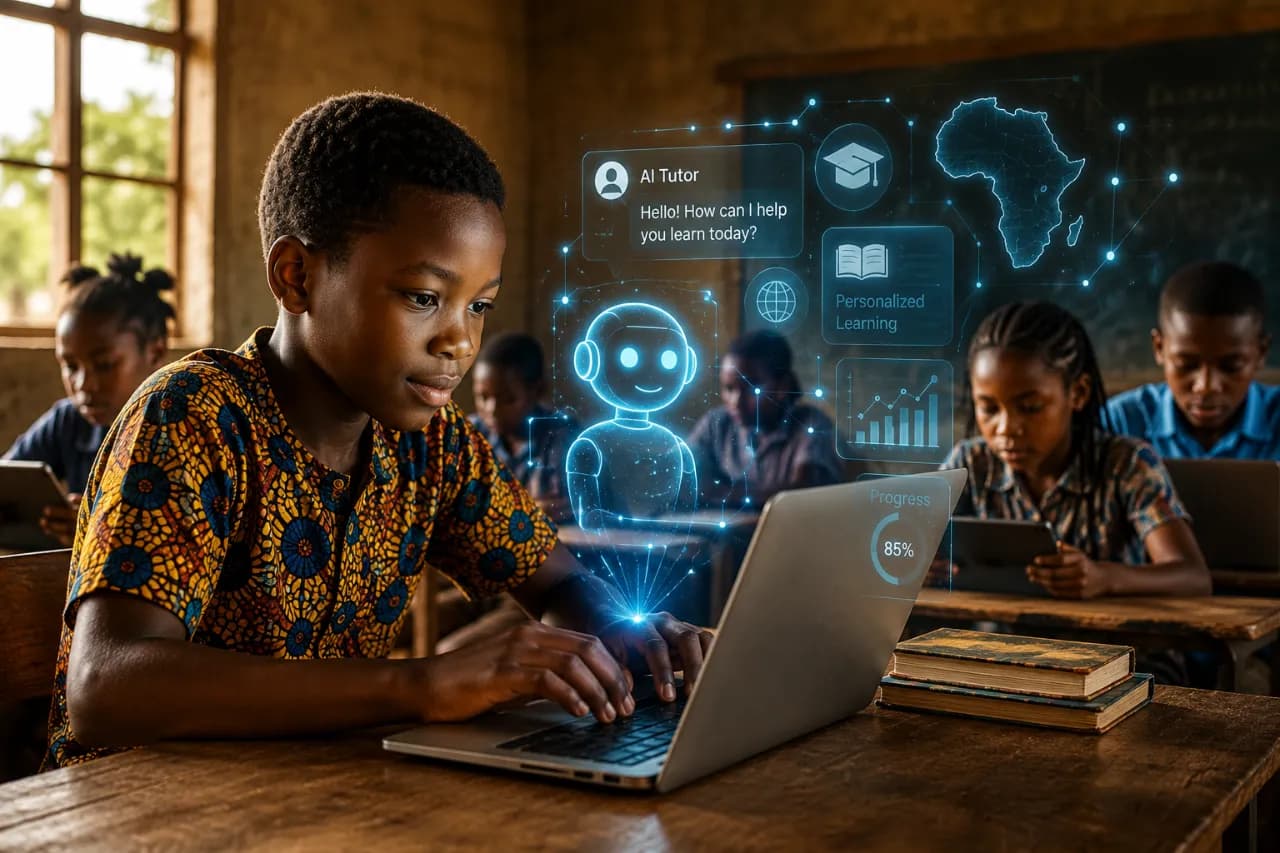
Imagine a student in a rural African village with limited access to teachers, libraries, and learning materials. Now imagine that same student having access to an intelligent learning assistant available 24 hours a day, capable of answering questions, explaining concepts, and guiding them through their studies.
This is no longer a vision of the future. It is happening today through Artificial Intelligence (AI).
Across the world, AI is transforming the way people learn, teach, and access information. For Africa, where millions of young people are eager to learn but often face educational challenges, AI presents a unique opportunity to bridge gaps and create new pathways to knowledge and innovation.
As the continent continues its digital transformation, AI has the potential to make education more accessible, personalized, and impactful than ever before.
The Challenges Facing Education in Africa
Education remains one of Africa's greatest opportunities and one of its greatest challenges.
Many schools across the continent continue to face obstacles such as:
- Shortages of qualified teachers
- Limited access to textbooks and learning materials
- Overcrowded classrooms
- Insufficient STEM resources
- Unequal access to technology between urban and rural communities
Despite these challenges, Africa is home to one of the youngest populations in the world. This young population represents an incredible source of talent, creativity, and innovation. The challenge is ensuring that every learner has access to quality education and the tools needed to succeed in the modern world.
Personalized Learning Through AI
One of the most powerful benefits of AI in education is personalized learning.
Every student learns differently. Some students grasp concepts quickly, while others require additional support and practice. Traditional classrooms often struggle to accommodate these different learning styles due to time and resource constraints.
AI-powered learning platforms can adapt to individual students by:
- Identifying learning gaps
- Recommending appropriate learning materials
- Adjusting lesson difficulty
- Providing instant feedback
This allows students to learn at their own pace and receive support tailored to their specific needs.
AI as a Learning Assistant
AI tools such as ChatGPT and other educational assistants are changing how students access information.
Students can use AI to:
- Understand difficult concepts
- Practice mathematics
- Improve writing skills
- Learn programming
- Conduct research
- Generate study guides
Rather than replacing teachers, AI serves as an additional learning companion that can provide support whenever students need it.
For many learners, especially those with limited access to tutoring services, AI can become a valuable educational resource.
Expanding Access to Quality Education
One of the greatest promises of AI is its ability to democratize knowledge.
A student in a remote village should have the same opportunity to learn as a student in a major city. Through digital platforms and AI-powered tools, educational resources can reach communities that have traditionally been underserved.
This expansion of access can help reduce educational inequality and provide more learners with opportunities to develop valuable skills.
Supporting Teachers
AI is not only helping students; it is also supporting educators.
Teachers can use AI to:
- Create lesson plans
- Develop quizzes and assessments
- Generate teaching materials
- Provide personalized feedback
- Save time on administrative tasks
By reducing repetitive tasks, AI allows teachers to focus more on mentoring, inspiring, and supporting their students.
Technology works best when it empowers teachers rather than replaces them.
Opportunities for Africa
The impact of AI extends far beyond the classroom.
As African countries continue to invest in digital transformation, AI can contribute to advancements in:
Agriculture
AI can help farmers improve crop yields, monitor weather conditions, and make data-driven decisions.
Healthcare
AI can support disease detection, medical research, and healthcare delivery in underserved communities.
Entrepreneurship
Young innovators can use AI to create solutions that address local challenges and generate economic opportunities.
Data Science and Technology
AI literacy opens doors to careers in data science, machine learning, software development, and other emerging fields.
These opportunities highlight why AI education is becoming increasingly important for the next generation of African leaders.
Challenges and Responsible Use of AI
While AI offers tremendous potential, it is important to acknowledge its challenges.
Some concerns include:
- Limited internet access in some communities
- Digital infrastructure gaps
- Misinformation and inaccurate AI-generated content
- Data privacy concerns
- Overreliance on technology
To maximize the benefits of AI, learners and educators must use these tools responsibly, ethically, and critically.
AI should enhance human learning, not replace human thinking.
The Role of RiseAfrica Foundation
At RiseAfrica Foundation, we believe every African child deserves the opportunity to understand and benefit from emerging technologies.
Our mission is to empower African youth through STEM education, innovation, mentorship, and community-driven action.
By promoting AI literacy and digital skills, we aim to help young people prepare for the future while equipping them to solve the challenges of today.
Through school outreach programs, STEM clubs, mentorship initiatives, and community engagement, RiseAfrica is committed to ensuring that no young person is left behind in the digital age.
Conclusion
Artificial Intelligence is changing education across the globe, and Africa has an opportunity to harness its power for positive transformation.
From personalized learning and teacher support to expanded educational access and career opportunities, AI is opening new possibilities for millions of learners.
The question is no longer whether AI will influence education.
The real question is whether we are prepared to ensure that every young African has the opportunity to benefit from it.
The future of education in Africa is not only digital.
It is intelligent, inclusive, and full of possibility.
Written by RiseAfrica Foundation – Empowering Africa Through STEM & Innovation.